
Introduction
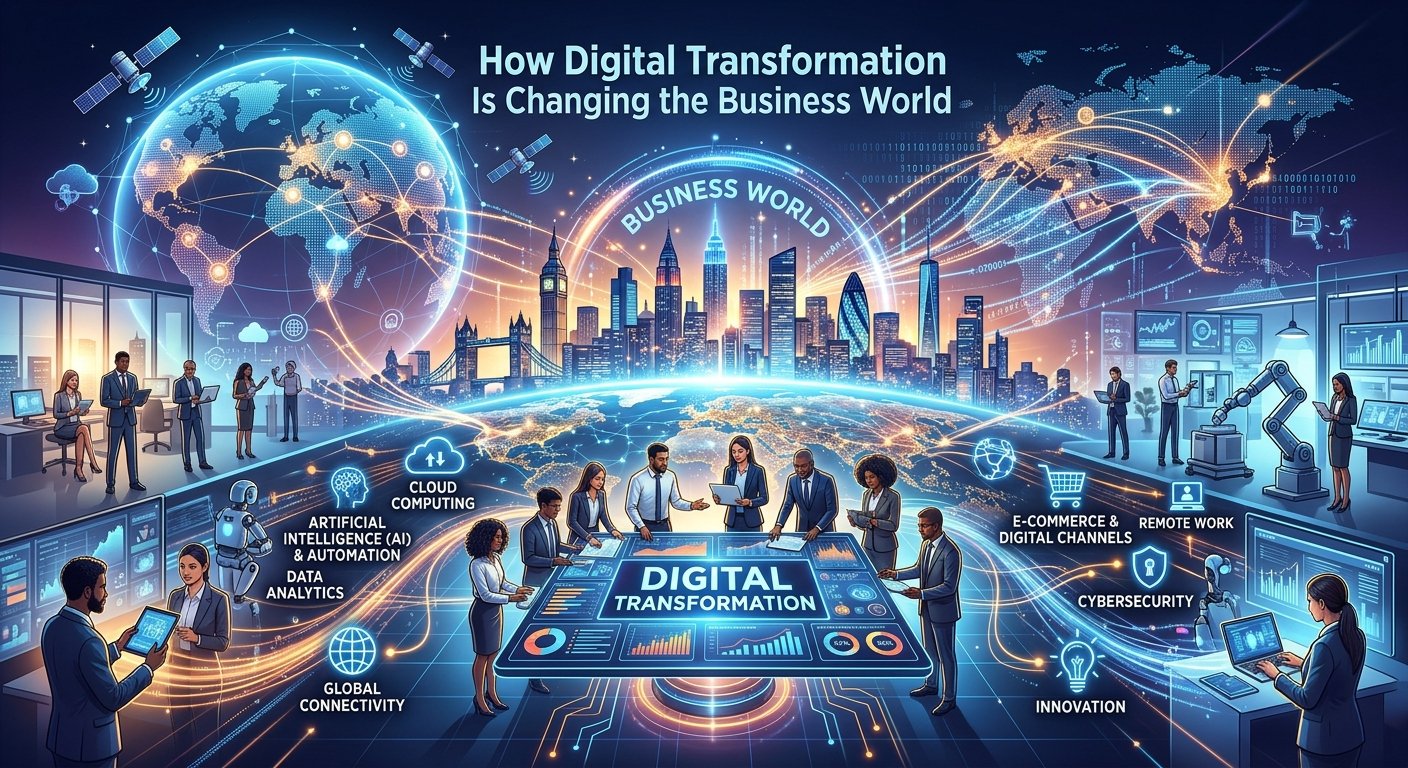
Digital transformation is one of the most important developments shaping the modern business world. As technology continues to advance, companies are changing the way they operate, communicate with customers, manage employees, and deliver products and services. From artificial intelligence and cloud computing to automation and data analytics, digital technologies are helping businesses become more efficient, innovative, and competitive.
Today, digital transformation is no longer just an option for companies that want to grow. It has become an essential part of modern business success. Organizations that adopt digital solutions can improve productivity, reduce operational costs, and create better customer experiences.
What Is Digital Transformation in Business?
Digital transformation refers to the integration of modern digital technologies into different areas of a business. It involves improving traditional processes, introducing innovative solutions, and developing new ways of creating value for customers.
Businesses use digital tools to automate daily tasks, manage information, communicate with customers, and make better decisions. This transformation can affect everything from marketing and sales to finance, human resources, and customer support.
The main goal of digital transformation is to make business operations faster, smarter, and more effective.
The Role of Artificial Intelligence in Modern Businesses
Artificial intelligence (AI) is playing a significant role in changing how businesses operate. AI-powered tools help companies analyze information, automate repetitive tasks, and understand customer behavior.
Many organizations use AI-powered chatbots to answer customer questions, recommend products, and provide support. AI can also help businesses identify market trends, improve decision-making, and develop more personalized marketing strategies.
By using artificial intelligence, companies can save time, increase efficiency, and focus more on innovation and business growth.
Cloud Computing and Remote Business Operations

Cloud computing has transformed the way businesses store, access, and manage information. Instead of depending entirely on physical computers and local storage systems, companies can use cloud-based platforms to access data securely from different locations.
Cloud technology also supports remote working and team collaboration. Employees can share documents, attend virtual meetings, and manage projects without being physically present in the same office.
This flexibility allows businesses to reduce infrastructure expenses, improve communication, and maintain productivity in changing work environments.
Automation Improves Business Efficiency
Business automation is another major part of digital transformation. It allows companies to use technology to complete repetitive tasks with greater speed and consistency.
For example, businesses can automate billing, appointment scheduling, inventory management, customer notifications, and data entry.
Automation reduces manual workloads and helps employees focus on more important responsibilities. It can also minimize human errors, improve workflow management, and increase overall operational efficiency.
Digital Marketing and Customer Engagement
Digital transformation has completely changed the way companies promote their products and services. Traditional marketing methods are now supported by digital platforms such as social media, search engines, email marketing, and online advertising.
Businesses can reach larger audiences, communicate directly with customers, and promote their brands through targeted marketing campaigns.
Search engine optimization (SEO) also plays an important role in digital business growth. By creating useful content and improving website visibility, companies can attract potential customers and build a stronger online presence.
Social media platforms allow businesses to understand customer preferences, receive feedback, and develop long-term relationships with their audiences.
Data Analytics and Smarter Decision-Making
Data has become one of the most valuable resources in the modern business world. Companies collect information about customer preferences, purchasing behavior, market conditions, and business performance.
Data analytics tools help organizations understand this information and make informed decisions.
For example, businesses can identify popular products, monitor sales performance, understand customer needs, and recognize opportunities for improvement.
Instead of depending only on assumptions, companies can use data-driven insights to develop effective strategies and achieve better results.
E-Commerce and the Growth of Online Businesses
Digital transformation has created new opportunities for businesses through e-commerce. Customers can now explore products, compare prices, place orders, and make payments through online platforms.
Small businesses can also establish online stores and reach customers beyond their local markets without requiring large physical retail spaces.
Digital payment systems, online marketplaces, and mobile shopping applications have made purchasing products more convenient.
As online shopping continues to develop, businesses are investing in better websites, secure payment options, and efficient delivery systems to improve customer satisfaction.
Cybersecurity and Data Protection
As businesses become more dependent on digital technologies, cybersecurity has become increasingly important. Companies handle valuable information, including customer details, financial records, and confidential business data.
Cybersecurity solutions help protect this information against unauthorized access, online fraud, and digital threats.
Businesses should invest in secure systems, strong passwords, regular software updates, employee awareness, and reliable data backup solutions.
Protecting digital information is essential for maintaining customer trust and ensuring long-term business stability.
Challenges of Digital Transformation
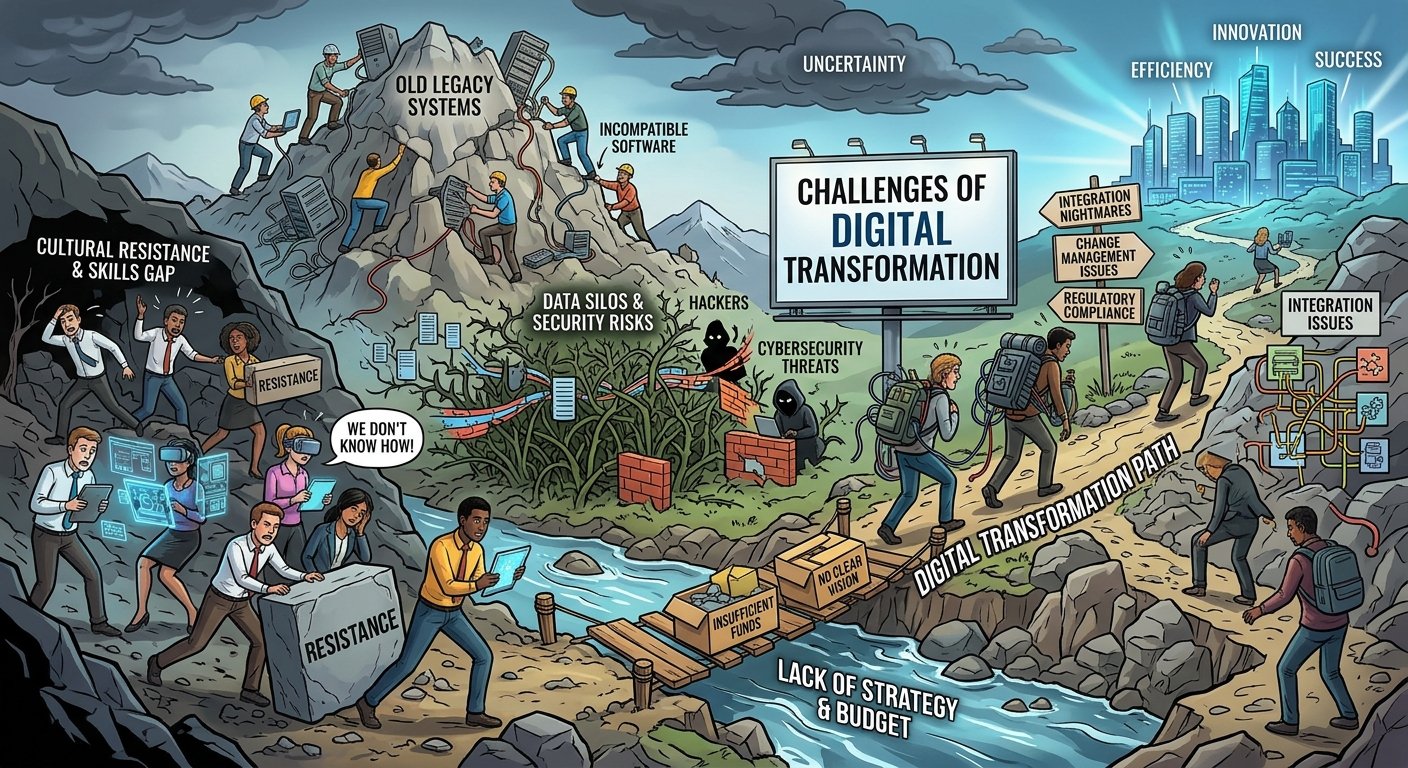
Although digital transformation offers many advantages, businesses may face several challenges during implementation.
Some common challenges include:
- High Initial Costs: Introducing new technologies may require significant investment.
- Employee Training: Workers need proper training to use modern digital tools effectively.
- Cybersecurity Risks: Increased digital activity can expose businesses to online threats.
- Resistance to Change: Some employees may find it difficult to adapt to new systems and processes.
- Technical Difficulties: Integrating new technologies with existing systems can be complicated.
Businesses can overcome these challenges through careful planning, employee training, appropriate technology investments, and strong cybersecurity practices.
The Future of Digital Transformation in Business
The future of digital transformation will bring even more opportunities for innovation and business development. Emerging technologies such as artificial intelligence, machine learning, blockchain, the Internet of Things (IoT), and advanced automation are expected to influence different industries.
Businesses will increasingly use intelligent systems to improve customer experiences, manage operations, and develop innovative products and services.
Companies that remain flexible and continue investing in digital innovation will be better prepared to respond to changing customer expectations and market competition.
Conclusion
Digital transformation is changing the business world by introducing smarter technologies, improving operational efficiency, and creating new opportunities for growth. Artificial intelligence, cloud computing, automation, data analytics, and e-commerce are helping organizations modernize their operations and deliver better customer experiences.
Although adopting new technologies can involve challenges, the long-term benefits make digital transformation an important business priority. Companies that embrace innovation, invest in digital skills, and protect their information can build stronger and more competitive organizations.
In today’s technology-driven environment, digital transformation is not simply about using modern tools; it is about creating a smarter, more connected, and future-ready business world.