
Introduction
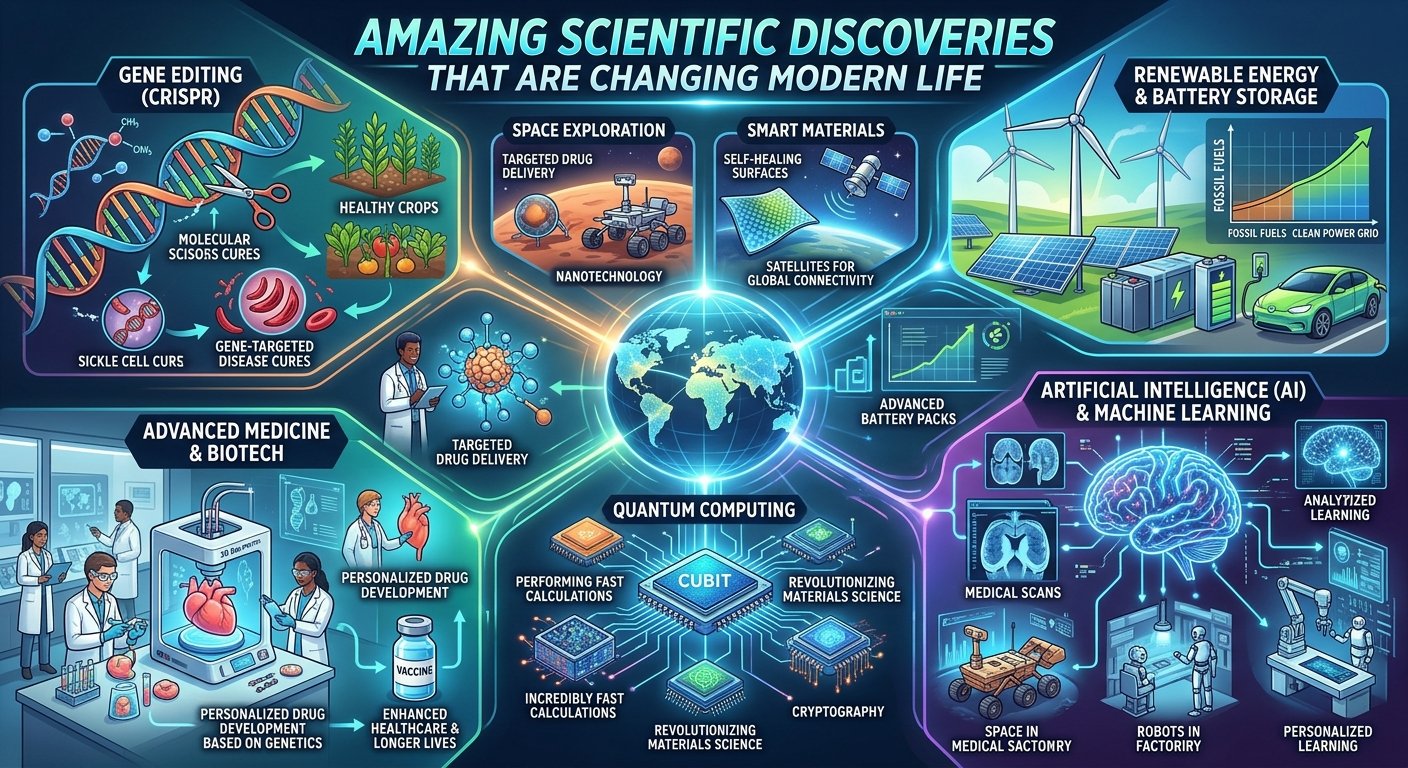
Science has always played an important role in shaping human civilization. From the invention of electricity to the development of modern computers, scientific discoveries have transformed the way people live, work, communicate, and understand the world. Today, rapid advancements in technology, medicine, space exploration, and environmental research are creating opportunities that were once considered impossible.
Amazing scientific discoveries are changing modern life by improving healthcare, making communication faster, supporting environmental protection, and introducing innovative solutions to everyday challenges. These breakthroughs are not only improving our present lifestyle but also creating exciting possibilities for future generations.
Let’s explore some of the most important scientific discoveries and innovations that are transforming the modern world.
1. Artificial Intelligence: Transforming Everyday Life
AI is being used in education, healthcare, transportation, business, and communication. Smart assistants help people manage daily activities, while advanced AI systems support doctors in analyzing medical information.
Artificial intelligence is also helping businesses improve productivity, automate repetitive tasks, and make better decisions. As research continues, AI is expected to play an even greater role in shaping the future.
2. Medical Discoveries Improving Human Healthcare
One important development is personalized medicine, which focuses on understanding individual differences to provide more suitable healthcare treatments.
Other major medical advancements include:
-
Gene therapy: Helping researchers develop treatments for certain genetic conditions.
-
Advanced vaccines: Supporting protection against infectious diseases.
-
Robotic surgery: Assisting medical professionals with complex procedures.
-
Early disease detection: Using advanced technologies to identify health problems sooner.
-
Regenerative medicine: Exploring ways to repair or replace damaged tissues.
These medical breakthroughs are improving healthcare services and opening new possibilities for treating diseases.
3. Space Exploration and Discoveries Beyond Earth
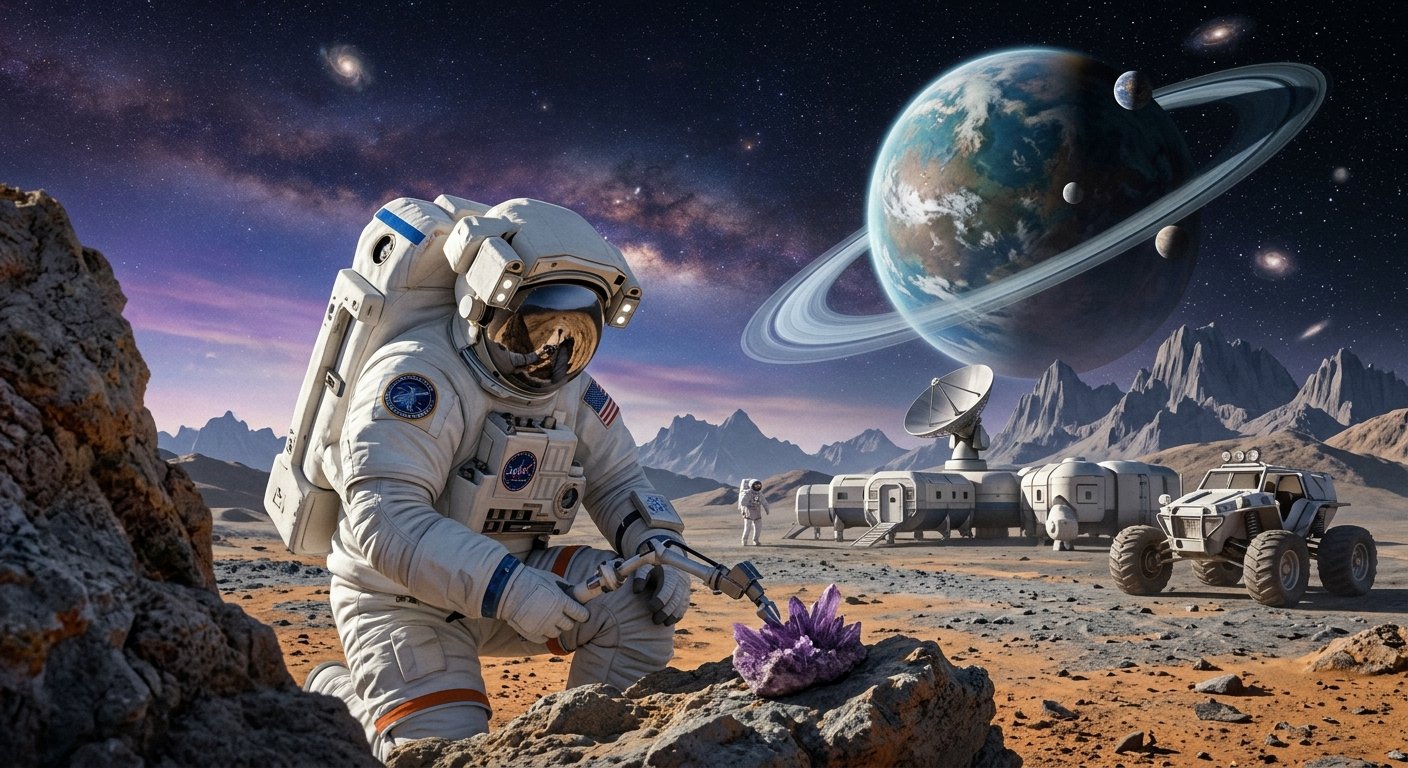
The James Webb Space Telescope has provided extraordinary observations of distant galaxies and planetary systems, helping researchers investigate how the universe developed.
Scientists are also studying Mars to understand its environment and investigate whether conditions for ancient microbial life may once have existed.
Space research contributes to modern life through satellite communication, weather forecasting, navigation systems, and environmental monitoring.
4. Renewable Energy: Creating a Cleaner Future
Solar panels convert sunlight into electricity, while wind turbines generate power using moving air. Researchers are also improving battery storage systems to make renewable energy more reliable.
Some important developments include:
-
More efficient solar technology.
-
Advanced energy storage batteries.
-
Modern wind power systems.
-
Green hydrogen research.
-
Smart electricity networks.
These innovations can reduce dependence on fossil fuels and support a more sustainable future.
5. Biotechnology: Changing Agriculture and Medicine
Scientists use genetic research, microorganisms, and biological processes to develop innovative solutions. In medicine, biotechnology supports the development of advanced treatments and diagnostic tools.
In agriculture, researchers are working on improved crop varieties that can better tolerate certain environmental challenges. Biotechnology also contributes to food production, disease research, and environmental cleanup.
Its growing applications make it one of the most promising areas of modern scientific research.
6. Quantum Computing: A New Era of Computing
Unlike traditional computers, which use bits represented by zeros and ones, quantum computers use quantum bits, known as qubits.
Researchers are exploring how quantum computing could help solve certain complex problems in chemistry, materials science, optimization, and scientific simulation.
Although this technology is still developing, it could introduce major changes in computing and scientific research in the coming years.
7. Robotics and Automation: Making Work More Efficient
Modern robotic systems can perform repetitive and highly precise tasks. In healthcare, robotic technologies assist medical professionals during certain procedures. In factories, automated machines help improve production processes.
Robotics is also supporting scientific exploration in environments that are difficult for humans to access.
These technologies are making many industries more efficient while creating new opportunities for technical skills and innovation.
8. Nanotechnology: Innovation at a Tiny Scale
Researchers are investigating nanoparticles for targeted drug delivery, developing advanced materials, and improving electronic components.
Nanotechnology may also contribute to water purification, more efficient batteries, and stronger lightweight materials.
Although many applications are still under development, this field has significant potential to improve modern products and technologies.
9. 3D Printing: Revolutionizing Modern Manufacturing
It is being used in engineering, architecture, education, healthcare, and product development.
For example, medical researchers use 3D printing to produce customized prosthetic devices and anatomical models. Engineers use it to create prototypes and test new product designs.
As materials and printing technologies improve, 3D printing may make manufacturing more flexible and accessible.
10. The Future of Scientific Discoveries
The future of science is full of possibilities. Researchers are continuing to investigate new technologies and solutions to global challenges.
Some important areas of future research include:
-
Advanced treatments for complex diseases.
-
More efficient renewable energy systems.
-
Improved space exploration technologies.
-
Sustainable agriculture and food production.
-
Artificial intelligence and advanced computing.
-
New materials for environmental protection.
These developments demonstrate that scientific research is an ongoing process. Every discovery creates opportunities for further investigation and innovation.
Conclusion
Amazing scientific discoveries are transforming modern life in countless ways. From artificial intelligence and medical breakthroughs to renewable energy, biotechnology, and space exploration, science continues to improve human knowledge and technological capabilities.
These innovations are helping solve important challenges, improving everyday services, and creating opportunities for future generations. However, scientific progress must also be guided by responsibility, ethical considerations, and environmental awareness.
As researchers continue exploring new ideas, the world can expect even more remarkable discoveries. Science is not simply about understanding how things work; it is also about creating a better, safer, and more sustainable future for humanity.
- Amazing Scientific Discoveries That Are Changing Modern Life