
Introduction
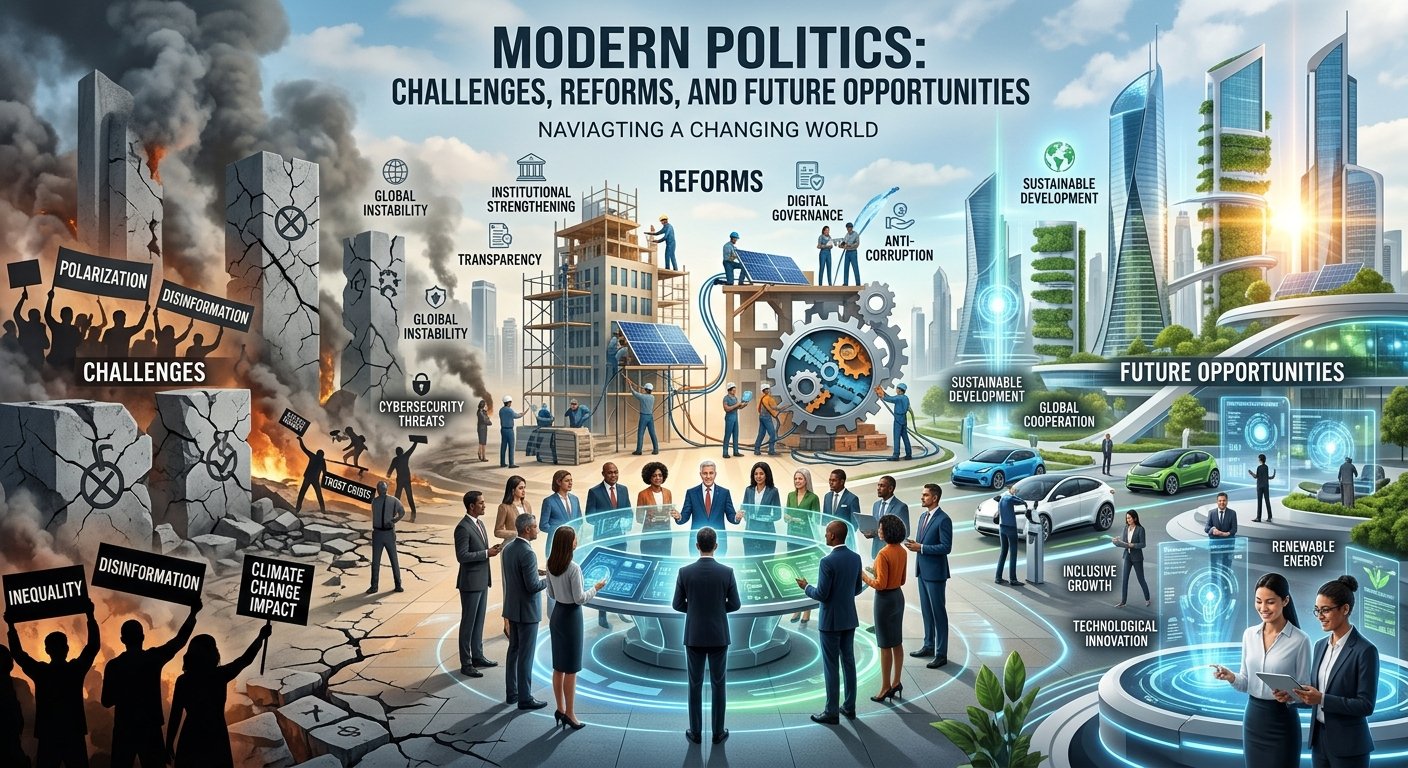
Modern politics plays a significant role in shaping societies, economies, and international relationships. It influences how countries are governed, how public resources are distributed, and how important decisions are made. In today’s rapidly changing world, political systems face new challenges due to technological developments, economic uncertainty, social changes, and increasing public expectations. Citizens are becoming more aware of their rights and responsibilities, demanding transparency, accountability, and effective leadership from their governments.
Modern politics is no longer limited to elections, political parties, and government institutions. It also involves digital communication, public participation, human rights, economic development, environmental protection, and international cooperation. Understanding these developments is essential for building stronger democratic institutions and creating a more stable and prosperous future.
Understanding Modern Politics
Modern politics refers to the contemporary systems, ideas, institutions, and activities through which societies are governed and public decisions are made. It includes democracy, political leadership, public policies, international relations, and citizen participation.
Political systems around the world are continuously evolving to address the needs of modern societies. Governments must respond to challenges such as unemployment, inflation, education, healthcare, climate change, and technological transformation.
An effective political system should ensure equal opportunities, protect fundamental rights, promote economic stability, and provide citizens with opportunities to participate in decision-making.
Major Challenges Facing Modern Politics
Despite significant progress in political systems, many countries continue to experience challenges that affect governance, public trust, and national development.
1. Political Corruption and Lack of Accountability
Political corruption remains one of the biggest obstacles to effective governance. Misuse of public funds, favoritism, bribery, and abuse of authority weaken institutions and reduce public confidence in government.
When political leaders prioritize personal interests over national development, citizens lose trust in the political system. Strong accountability mechanisms, independent institutions, and transparent government procedures are necessary to address these problems.
2. Economic Inequality and Unemployment
Economic inequality is another major challenge in modern politics. Differences in income, employment opportunities, education, and access to essential services create social divisions.
Governments must develop policies that encourage economic growth while ensuring that its benefits reach different sections of society. Creating employment opportunities, supporting small businesses, improving education, and investing in public services can help reduce economic inequality.
3. Misinformation and Digital Political Influence
Technology and social media have transformed political communication. Political leaders, institutions, and citizens can now share information instantly with millions of people.
However, digital platforms also create opportunities for misinformation, misleading political campaigns, and the spread of unverified information. These issues can influence public opinion and weaken informed democratic participation.
Promoting digital literacy, responsible journalism, and access to reliable information is essential for protecting the quality of political discussions.
4. Declining Public Trust in Political Institutions
Public trust is essential for a successful political system. However, broken promises, ineffective policies, political conflicts, and a lack of transparency can create dissatisfaction among citizens.
Governments must rebuild public confidence by listening to communities, communicating honestly, delivering effective services, and ensuring that political decisions reflect public needs.
5. International Conflicts and Global Political Instability
Modern politics is strongly influenced by international relationships. Wars, diplomatic tensions, trade disputes, migration, and competition for resources can affect global peace and economic stability.
Countries must strengthen diplomatic relationships, respect international agreements, and cooperate on shared challenges to create a more peaceful and secure world.
The Importance of Political Reforms
Political reforms are essential for improving governance and making political institutions more effective, transparent, and responsive. Reforms help address weaknesses in existing systems while creating opportunities for long-term national development.
1. Strengthening Democratic Institutions
Strong democratic institutions protect citizens’ rights and ensure that governments operate according to established laws and constitutional principles.
Independent courts, fair electoral systems, transparent institutions, and effective legislative bodies are important elements of democratic governance.
2. Promoting Transparency and Accountability
Governments should make public information accessible and ensure that public resources are used responsibly. Independent auditing, anti-corruption measures, freedom of information, and strong accountability systems can improve public confidence.
Political leaders must be responsible for their decisions and remain answerable to the people they represent.
3. Encouraging Youth Participation in Politics
Young people represent an important part of society and have the potential to contribute fresh ideas, innovative solutions, and positive leadership.
Encouraging youth participation in political discussions, educational programs, community activities, and democratic processes can strengthen political awareness.
Youth leadership also helps ensure that future policies consider the needs and aspirations of upcoming generations.
4. Improving Education and Political Awareness
Education plays an important role in developing responsible citizens. People who understand political systems, constitutional rights, public responsibilities, and democratic values are better prepared to make informed decisions.
Governments and educational institutions should promote civic education and encourage respectful political discussions.
5. Modernizing Government Institutions
Digital transformation can improve the efficiency of government institutions. Online public services, electronic record systems, digital communication, and transparent administrative procedures can reduce delays and make public services more accessible.
However, governments must also protect citizens’ privacy and ensure that digital services remain accessible to people with limited technological resources.
The Role of Technology in Modern Politics
Technology has become one of the most influential forces shaping modern political systems. Digital platforms have changed how political campaigns are organized, how governments communicate, and how citizens express their opinions.
Social media allows citizens to discuss public issues, raise awareness, and engage directly with political representatives. Digital government services can also improve administrative efficiency and make public information easier to access.
Artificial intelligence and data analysis offer additional opportunities for improving public policy and understanding social needs. Governments can use responsible technological solutions to improve planning, public services, and decision-making.
Nevertheless, technological progress must be supported by strong privacy protections, cybersecurity measures, and ethical standards.
The Future Opportunities in Modern Politics
The future of politics offers several opportunities to create more inclusive, transparent, and effective systems of governance.
1. Digital Democracy
Digital democracy can provide citizens with more opportunities to participate in public discussions and government decision-making. Online consultation platforms and digital public services can make communication between governments and communities more accessible.
2. Inclusive Political Leadership
Future political systems should provide equal opportunities for individuals from different social and economic backgrounds to participate in leadership and decision-making.
Inclusive leadership can bring diverse perspectives into public policy and help governments understand the needs of different communities.
3. Sustainable Development Policies
Climate change, environmental pollution, and resource management are becoming important political issues. Future governments must prioritize renewable energy, environmental protection, sustainable agriculture, and responsible economic development.
Political cooperation on environmental issues can help protect natural resources and improve the quality of life for future generations.
4. International Cooperation
Global challenges require cooperation between countries. Governments can work together on economic development, public health, education, technological innovation, environmental protection, and international security.
Strong diplomatic relationships and constructive international partnerships can create opportunities for global progress.
5. Better Governance Through Innovation
Innovation can help governments improve public administration and deliver better services. Evidence-based policymaking, modern infrastructure, digital solutions, and effective public-sector management can contribute to stronger institutions.
Future political leaders will need to combine traditional democratic values with modern solutions to address changing public expectations.
The Role of Citizens in Strengthening Modern Politics
Political development is not only the responsibility of governments and political leaders. Citizens also play an important role in shaping the future of their countries.
Responsible citizens should understand their rights, respect the rights of others, stay informed about national issues, and participate constructively in democratic processes.
They should evaluate political information carefully, avoid spreading misinformation, and support peaceful discussions.
Public participation, community engagement, and responsible voting can encourage better leadership and strengthen democratic institutions.
Conclusion
Modern politics is experiencing significant changes as societies face economic, technological, environmental, and social challenges. Although problems such as corruption, inequality, misinformation, and declining public trust continue to affect political systems, meaningful reforms can create opportunities for positive transformation.
The future of modern politics depends on transparent governance, responsible leadership, strong democratic institutions, technological innovation, and active citizen participation. Governments must focus on public welfare, equal opportunities, education, and sustainable development to build stronger societies.
Ultimately, successful political progress requires cooperation between governments, institutions, and citizens. By addressing current challenges and embracing meaningful reforms, countries can create a political environment that supports peace, justice, economic growth, and a better future for coming generations.