
Introduction
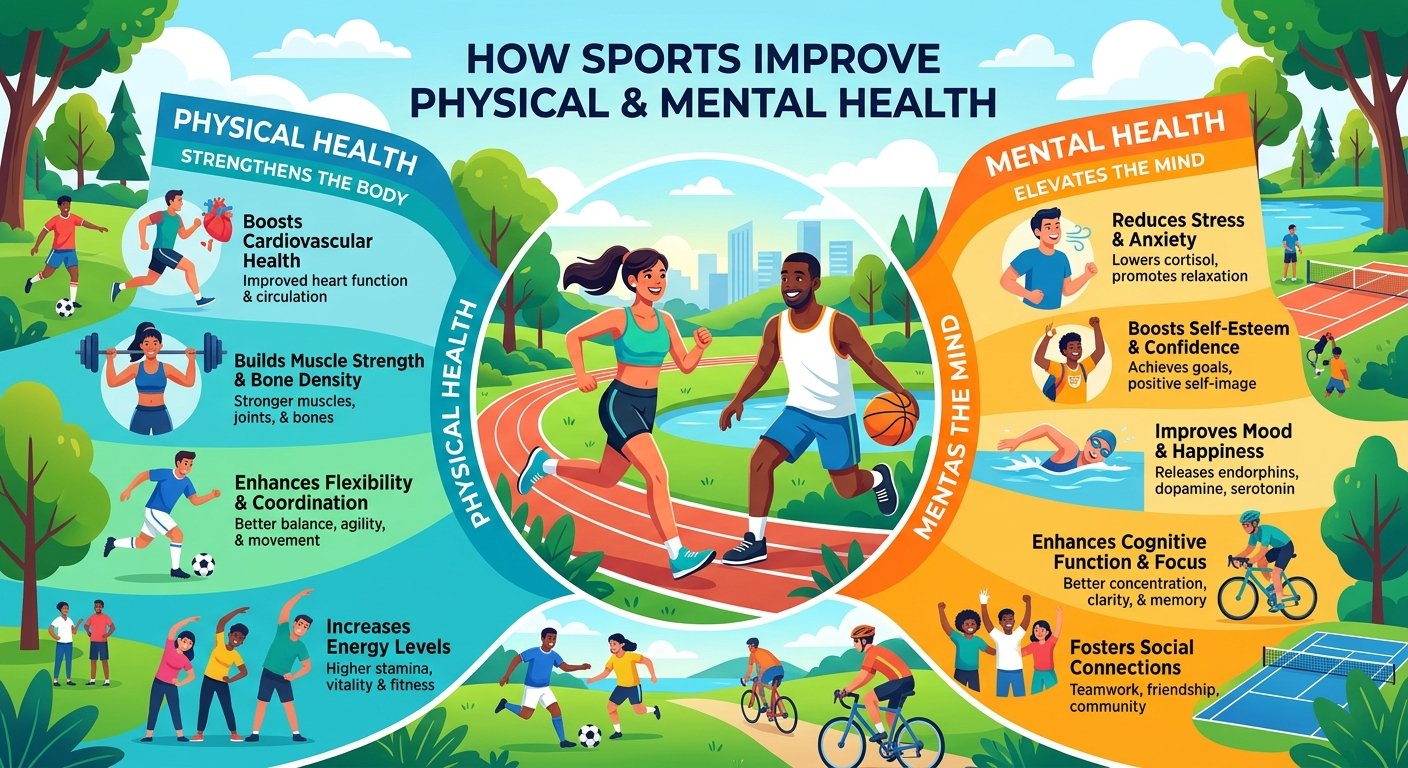
Sports play an important role in maintaining a healthy and balanced lifestyle. Whether it is football, cricket, basketball, tennis, swimming, or cycling, participating in sports offers numerous benefits for both the body and mind. In today’s busy world, many people spend long hours sitting, working, or using digital devices, making physical activity more important than ever. Regular participation in sports helps improve physical fitness, reduce stress, develop confidence, and promote emotional well-being.
Understanding how sports improve physical and mental health can encourage people of all ages to make physical activity an essential part of their daily routine.
1. Sports Improve Physical Fitness
One of the most important benefits of playing sports is improved physical fitness. Regular physical activity strengthens muscles, improves flexibility, and increases stamina. Sports such as running, swimming, football, and cycling help improve cardiovascular fitness and support better overall health.
Playing sports also helps improve coordination, balance, and body movement. These physical benefits make everyday activities easier and encourage people to maintain an active lifestyle.
2. Sports Strengthen the Heart and Muscles

Sports activities are excellent for supporting heart health. Activities that increase the heart rate, such as jogging, basketball, and swimming, help improve blood circulation and strengthen the cardiovascular system.
Different sports also work different muscle groups. For example, swimming engages several muscle groups, while football develops coordination and lower-body strength. Regular participation in physical activities supports stronger muscles and healthier bones.
3. Sports Support Mental Health and Reduce Stress
Sports are not only beneficial for physical fitness but also play a significant role in improving mental health. Physical activity can help reduce stress, improve mood, and promote relaxation.
When people participate in sports, their bodies release natural chemicals called endorphins, which are associated with positive feelings. Playing a favorite sport can provide a refreshing break from daily responsibilities and help people feel more relaxed.
Sports can also offer a healthy way to manage everyday challenges and maintain emotional balance.
4. Sports Improve Confidence and Self-Esteem
Participating in sports helps individuals develop confidence and believe in their abilities. Learning new skills, achieving personal goals, and improving performance can create a strong sense of accomplishment.
Sports also teach people how to face challenges, accept mistakes, and keep trying. These experiences build self-confidence and encourage a positive attitude toward life.
Children and young people can especially benefit from sports because they provide opportunities to develop independence, responsibility, and personal growth.
5. Sports Improve Brain Function and Concentration
Regular physical activity can support brain health and improve concentration, memory, and learning abilities. Many sports require quick thinking, decision-making, and problem-solving skills.
For example, football players must make quick decisions during a match, while basketball players need to plan their movements and work strategically with teammates.
These activities encourage mental alertness and help develop important cognitive skills that are useful in education, work, and everyday life.
6. Sports Encourage Teamwork and Social Connections
Team sports such as cricket, football, volleyball, and basketball teach valuable social skills. Players learn how to communicate, cooperate, respect others, and work toward shared goals.
Sports also create opportunities to meet new people and develop meaningful friendships. Being part of a team can provide a sense of belonging and encourage positive social interaction.
These experiences help individuals become more cooperative, responsible, and understanding.
7. Sports Promote Better Sleep and Daily Energy
Regular physical activity can improve sleep quality and help individuals maintain a healthy daily routine. People who participate in sports often experience better relaxation and feel more refreshed.
Sports can also increase energy levels by improving physical endurance and overall fitness. A balanced routine that includes physical activity, sufficient sleep, and healthy nutrition supports general well-being.
8. Sports Teach Discipline and Time Management

Success in sports requires dedication, patience, consistency, and discipline. Athletes must follow practice schedules, respect rules, and work toward specific goals.
These habits can positively influence other areas of life. Students can apply the discipline they learn through sports to their studies, while adults can use these skills to improve their personal and professional routines.
Sports also teach an important lesson: success comes through continuous effort and determination.
9. Different Types of Sports for a Healthy Lifestyle
There are many sports and physical activities that people can enjoy according to their interests and abilities.
Some popular options include:
- Football: Improves cardiovascular fitness, coordination, and teamwork.
- Cricket: Develops concentration, communication, and physical coordination.
- Basketball: Supports agility, balance, and teamwork.
- Swimming: Provides a full-body workout and improves endurance.
- Cycling: Supports heart health and strengthens leg muscles.
- Tennis: Develops coordination, concentration, and quick reactions.
- Badminton: Improves movement, balance, and cardiovascular fitness.
Choosing an enjoyable sport makes it easier to stay physically active and maintain consistency.
10. How to Make Sports Part of Your Daily Routine
Making sports a regular habit does not require expensive equipment or professional training. Simple activities can make a positive difference in everyday life.
Here are some practical ways to become more active:
- Choose a sport that matches your interests and abilities.
- Set realistic physical activity goals.
- Schedule regular time for sports and outdoor activities.
- Invite friends or family members to participate.
- Warm up before physical activity and cool down afterward.
- Stay hydrated and maintain balanced nutrition.
- Allow enough time for rest and recovery.
- Focus on enjoyment, consistency, and personal progress.
Even small steps toward an active lifestyle can contribute to better physical and mental well-being.
Conclusion
Sports are much more than recreational activities; they are an essential part of a healthy lifestyle. From strengthening the heart and muscles to reducing stress, improving confidence, and developing social skills, sports provide a wide range of physical and mental health benefits.
Whether someone enjoys individual activities or team competitions, regular participation in sports can support a healthier, happier, and more productive life. By making physical activity a consistent habit, individuals can improve their overall well-being and enjoy the long-term benefits of an active lifestyle.
Remember, a healthy body and a healthy mind go hand in hand, and sports are one of the best ways to support both.